
What Is Vitamin D And Why Is It Important?


What Is Vitamin D?
Vitamin D is a steroid hormone that requires fat and help from the pancreas for proper absorption. Other names for vegetable sources of Vitamin D include ergocalciferol (Vitamin D2) or cholecalciferol in animal sources (Vitamin D3).
Vitamin D is first produced in the skin when exposed to sunlight and is made up of cholesterol (so go for a walk every morning to get some sun!). At the skin, Vitamin D targets hair follicles and helps prevent hair loss. It also plays a role in the health of our cells and our immune system.
In addition, Vitamin D works hard to absorb calcium and phosphorus. It does this in the intestine and uses calcium and phosphorus to build, stabilize, and breakdown our bones.
It works intimately with calcium and follows it to different organs throughout our body. As a result, Vitamin D interacts with the kidneys, bones, growth plates, and parathyroid glands.
When Can Vitamin D Deficiency Develop?
Vitamin D (and calcium) is one of the most common vitamin deficiencies, both before and after weight loss surgery.
Additional risk factors which can mostly be attributed to lifestyle include:
- Less intake of plant-based fat in our diets
- Vegetarian diet
- Low sun exposure
- Pre or menopausal women (due to less estrogen in the body to help protect bones from being broken down)
What Are the Common Symptoms of Deficiency?
Check if you are experiencing the following symptoms to know if you need to increase your intake of Vitamin D:
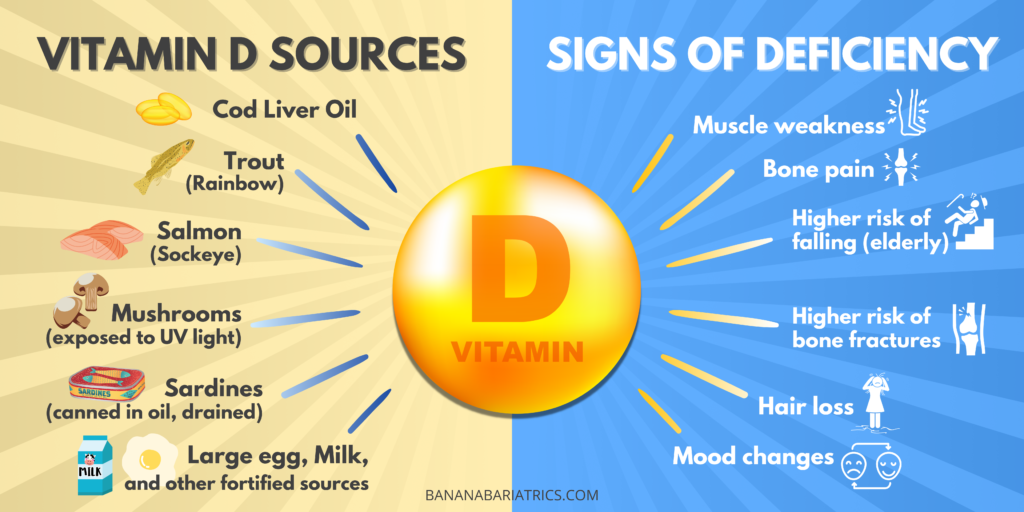
- Muscle weakness
- Bone pain
- Increased risk of falling (elderly)
- Increased risk of bone fractures (breaks)
- Depression
- Involuntary muscle movements
Where Can you Find Vitamin D?
The great thing about Vitamin D is that it is not hard to find. The best food sources of Vitamin D are fatty fish. A small amount of Vitamin D is found in butter, cream, and egg yolks. But, it is difficult to consume an adequate amount of Vitamin D naturally in our diets. As a result, food and beverages are fortified with Vitamin D.
Check Your supplement!
The recommended amount of Vitamin D3 is 3,000 IU / day.
If you think you are vitamin D deficient, consult a healthcare professional about the dosage that you should be taking.
Do you enjoy learning content like this?
Lucky for you, there’s an entire content library of bariatric content inside our membership support group Banana Bariatrics!
Share with others:
JOIN OUR COMMUNITY:



Responses